Register Transfer And Micro-Operations
Category: COMPUTER SCIENCE | 30th October 2025, Thursday
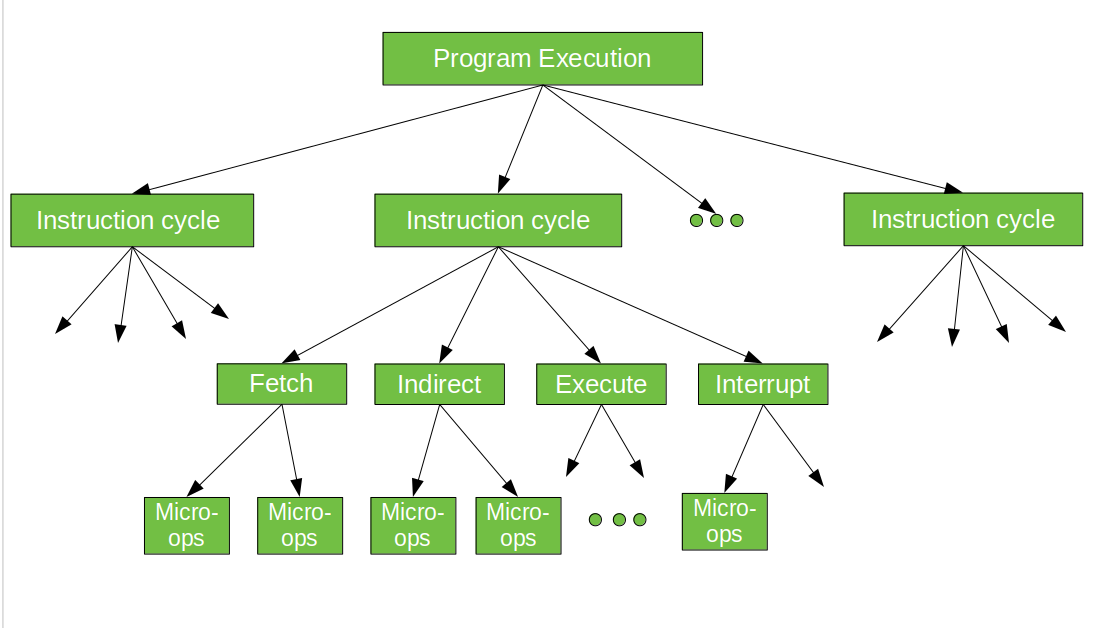
In The Architecture And Operation Of A Digital Computer, The Concepts Of register Transfer And micro-operations form The Foundation Of Data Processing And Control. Every Computer System, Regardless Of Its Size Or Speed, Performs Internal Data Movements And Manipulations Through Registers.
Registers Are Small, High-speed Storage Locations Within The Central Processing Unit (CPU) That Temporarily Hold Data, Addresses, Or Instructions. The Actions Performed On The Information Stored In These Registers Are Known As Micro-operations. Understanding Register Transfer And Micro-operations Is Crucial To Comprehending How A Computer Executes Instructions At The Hardware Level.
Register Transfer And Its Representation
The Term register Transfer Refers To The Process Of Transferring Binary Information From One Register To Another. It Is The Fundamental Operation Used To Move Data Internally Within A CPU. The Transfer Is Governed By Control Signals Generated By The Control Unit. Each Register Is Made Up Of A Group Of Flip-flops And Gates Capable Of Storing One Binary Word, Typically Consisting Of Multiple Bits.
Register Transfer Operations Are Usually Expressed Symbolically Using A Notation That Specifies The Source And Destination Registers. For Example, The Statement:
R2 ← R1
means That The Contents Of Register R1 Are Transferred Into Register R2. The Arrow Indicates The Direction Of Data Flow. This Operation Implies That The Binary Value Stored In R1 Is Copied Into R2 Without Altering The Content Of R1. The Actual Transfer Happens Only When A Specific Control Signal, Called A load or enable Signal, Is Activated.
Registers Are Connected Through A common Bus System That Allows Multiple Registers To Share The Same Data Lines For Efficient Data Transfer. A bus is A Set Of Parallel Lines That Carry Binary Data, Control Signals, And Addresses Among CPU Components. When Data Is Transferred Via A Bus, Specific Control Lines Determine Which Register Places Its Data Onto The Bus And Which Register Receives It.
Control Functions In Register Transfer
Register Transfer Operations Depend On Control Conditions That Dictate When A Transfer Occurs. A Control Function Is Often Represented By A Boolean Variable That Enables The Operation Only When Its Value Is 1. For Example:
If (P = 1), Then R2 ← R1
This Conditional Transfer Means That The Contents Of R1 Will Be Transferred To R2 Only If The Control Variable P Is Active. Such Control Variables Are Generated By The Control Unit During The Execution Of An Instruction. The Control Unit Coordinates The Timing And Sequencing Of All Micro-operations In The CPU.
To Manage Complex Data Movements, Computers Use multiplexers, decoders, And control Logic Circuits To Select The Source And Destination Registers. Each Operation Is Synchronized With A clock Pulse, Ensuring That All Changes In Data Occur At The Right Moment Within The Instruction Cycle.
Types Of Micro-Operations
Micro-operations are The Elementary Operations Performed On The Data Stored In Registers. Each Instruction Executed By The CPU Can Be Broken Down Into A Sequence Of Micro-operations. These Operations Are Synchronized By The System Clock And Executed Sequentially Or Concurrently Depending On The Design Of The Processor.
Micro-operations Are Generally Classified Into Four Categories:
1. Register Transfer Micro-operations
2. Arithmetic Micro-operations
3. Logic Micro-operations
4. Shift Micro-operations
1. Register Transfer Micro-operations
These Micro-operations Involve The Transfer Of Data Between Registers Without Modifying The Data. They Serve As The Backbone For All Other Operations In A Computer System. For Example:
R2 ← R1
is A Simple Register Transfer Operation. More Complex Operations Can Involve Multiple Control Signals And Bus Systems To Allow Simultaneous Transfers, But Each Transfer Follows The Same Fundamental Rule — Data Moves From A Source To A Destination Under The Control Of Specific Enable Signals.
2. Arithmetic Micro-operations
Arithmetic Micro-operations Perform Mathematical Calculations Such As Addition, Subtraction, Increment, Decrement, And Complement On The Data Stored In Registers. The Arithmetic Logic Unit (ALU) carries Out These Operations. For Instance:
- R3 ← R1 + R2 → Adds Contents Of R1 And R2 And Stores Result In R3.
- R2 ← R2 + 1 → Increments R2 By 1.
- R2 ← R2 - 1 → Decrements R2 By 1.
- R1 ← R1 → Takes The Complement Of R1.
These Operations Are Fundamental To Executing Arithmetic Instructions In Machine Language. Each Arithmetic Operation Is Implemented Through Combinational Logic Circuits That Perform Bitwise Operations Based On Binary Arithmetic Rules.
3. Logic Micro-operations
Logic Micro-operations Perform Bitwise Logical Manipulations On Data Stored In Registers. They Include Operations Like AND, OR, XOR, And NOT. These Operations Are Essential For Comparing Data, Masking Specific Bits, And Manipulating Binary Patterns. Examples Include:
- R3 ← R1 AND R2
- R3 ← R1 OR R2
- R3 ← R1 XOR R2
- R1 ← NOT R1
Logic Micro-operations Are Used Widely In Decision-making Processes, Condition Testing, And In Forming The Basis Of Logical Instruction Sets In Processors.
4. Shift Micro-operations
Shift Micro-operations Involve The Movement Of Data Bits Within A Register. Bits Can Be Shifted Left Or Right To Perform Specific Operations Like Multiplication Or Division By Powers Of Two. Shifting Can Be Of Three Types:
- Logical Shift – Vacant Positions Are Filled With Zeros.
- Arithmetic Shift – Preserves The Sign Bit For Signed Numbers During Shifts.
- Circular (Rotate) Shift – The Bits That Are Shifted Out From One End Are Reintroduced At The Opposite End.
For Instance:
- R1 ← Shl R1 (shift Left)
- R1 ← Shr R1 (shift Right)
- R1 ← Cir R1 (circular Shift)
Shift Operations Are Crucial In Arithmetic Computations, Data Encryption, And Bit Manipulation Tasks.
Bus And Data Movement
In Complex CPU Designs, Having Direct Connections Between All Registers Would Be Inefficient And Require A Large Number Of Wires. Instead, Most Systems Use A common Bus to Transfer Data Between Registers Efficiently.
A Bus System Can Be Designed Using multiplexers Or tri-state Buffers. In A Multiplexer-based System, Each Register’s Output Is Connected To The Inputs Of Multiplexers, And Control Signals Select Which Register’s Output Is Placed On The Bus. The Selected Data Is Then Transferred To The Destination Register When Its Load Control Signal Is Activated.
A Bus Reduces Hardware Complexity And Enables Flexible Data Movement. It Supports Multiple Simultaneous Transfers Through Control Logic, Enhancing The System’s Performance And Organization.
Timing And Control Of Micro-operations
All Register Transfer And Micro-operations Are Coordinated By The control Unit Using A Timing Mechanism Based On clock Pulses. The Control Signals Generated By The Control Unit Determine Which Micro-operation Is To Be Executed During Each Clock Pulse.
For Instance, In A Simple Instruction Execution Cycle, The Control Unit Might Generate The Following Sequence:
1. Fetch Cycle: Transfer Instruction From Memory To Instruction Register (IR).
- IR ← M[PC]
2. Decode Cycle: Decode Instruction In IR To Determine Operation Type.
3. Execute Cycle: Perform The Required Micro-operations (e.g., Arithmetic Or Logic Operations).
This Sequencing Ensures That The CPU Performs Operations In A Well-defined Order And That Data Integrity Is Maintained Throughout.
Hardware Implementation Of Micro-operations
In Hardware, Micro-operations Are Implemented Using combinational And Sequential Circuits. The ALU Performs Arithmetic And Logic Operations Through Logic Gates, Adders, And Multiplexers. Registers Are Constructed From flip-flops, And The Control Unit Generates Timing Signals Through decoders And sequencers.
Each Micro-operation Corresponds To A Specific Hardware Configuration, Where The Enabling Of Certain Gates Allows The Desired Data Transfer Or Manipulation. This Hardware-level Control Defines The Microarchitecture Of The CPU.
Importance Of Register Transfer And Micro-operations
The Understanding Of Register Transfer And Micro-operations Is Vital For Several Reasons:
- They form The Backbone of Instruction Execution Within The CPU.
- They define How The Control Unit Manages and Sequences The Execution Of Instructions.
- They optimize Data Handling, Ensuring Efficient Use Of System Buses And Registers.
- They influence Processor Speed, As Faster Register Transfers And Optimized Micro-operations Lead To Higher Performance.
- They Are Essential In microprogramming, Where Each Machine Instruction Is Implemented As A Sequence Of Micro-operations.
Conclusion
Register Transfer And Micro-operations Represent The Microscopic View Of Computer Instruction Execution. Every Program Executed On A Computer Is Ultimately Decomposed Into These Low-level Operations Controlled By Precise Timing Signals. Registers Act As The Workspace Of The CPU, And Micro-operations Define The Specific Transformations Or Transfers That Take Place Within That Workspace.
Together, They Enable The CPU To Perform Arithmetic, Logical, And Data Movement Operations With Incredible Speed And Precision. As Computer Architecture Evolves, The Underlying Principles Of Register Transfer And Micro-operations Continue To Form The Foundation Of Digital System Design, Bridging The Gap Between Hardware Circuitry And Software Execution.
Tags:
Register Transfer, Micro-operations