Microprogrammed Control: Concept, Architecture, And Working Explained
Category: COMPUTER SCIENCE | 31st October 2025, Friday
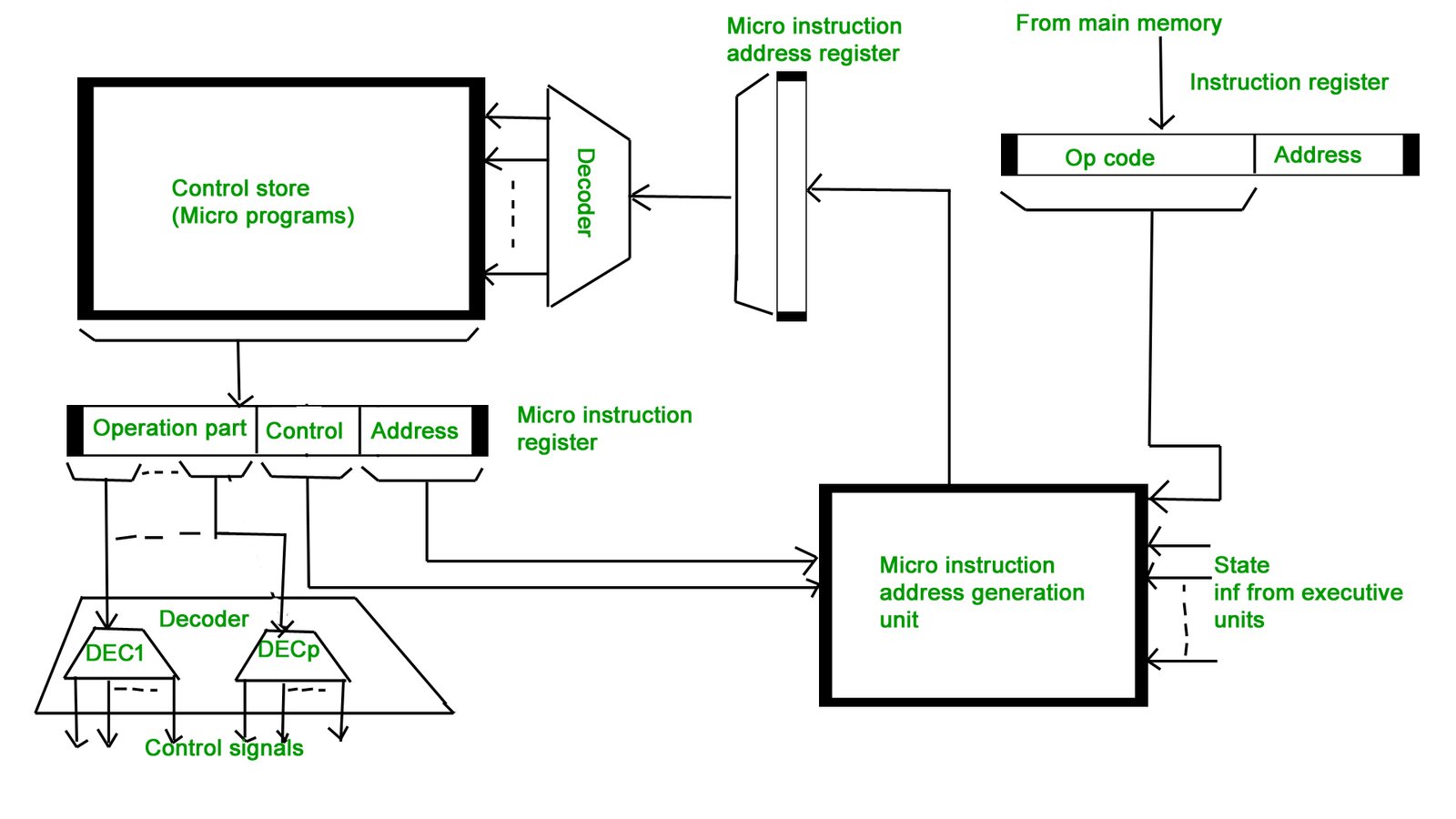
In The Design Of Computer Systems, The control Unit Plays A Vital Role In Managing The Execution Of Instructions And Coordinating The Operations Of Various Hardware Components. One Of The Most Efficient And Flexible Methods Of Designing The Control Unit Is Known As Microprogrammed Control.
Unlike A Hardwired Control Unit That Uses Fixed Logic Circuits, A Microprogrammed Control Unit Relies On A Sequence Of Microinstructions Stored In Memory. This Approach Makes Computer Systems More Adaptable, Easier To Modify, And Simpler To Debug. In This Article, We Will Explore The Concept, Architecture, Working Principles, Advantages, And Applications Of Microprogrammed Control In Modern Computing.
1. Introduction To Control Units
Every Computer System Has A central Processing Unit (CPU) That Executes Instructions Stored In Memory. Within The CPU, The control Unit (CU) acts As The “brain” That Directs The Operation Of The Processor. It Interprets The Binary-coded Instructions Of A Program And Generates The Control Signals Required To Move Data Between Registers, Activate Arithmetic Operations, And Manage Input/output Processes.
Control Units Are Generally Classified Into Two Types:
1. Hardwired Control Unit – Uses Combinational Logic Circuits To Produce Control Signals. It Is Fast But Difficult To Modify.
2. Microprogrammed Control Unit – Uses Microinstructions Stored In A Control Memory. It Is Slower But More Flexible.
Microprogrammed Control Is The Foundation Of CISC (Complex Instruction Set Computing) architectures Such As Intel X86, Where Instructions Can Vary In Complexity And Length.
2. What Is Microprogrammed Control?
Microprogrammed Control Refers To A Technique Where The Control Signals Required For Instruction Execution Are Generated By A Sequence Of Microinstructions Stored In A Special Memory Called Control Memory (CM). Each Microinstruction Defines One Or More Control Signals To Be Activated During A Specific Step Of The Instruction Cycle.
In Other Words, Instead Of Using Complex Hardware Wiring To Control The CPU, The Microprogrammed Approach Stores A program Of Control Signals—hence The Name “microprogramming.” This Makes The Control Logic programmable, And The CPU’s Behavior Can Be Changed Simply By Altering The Contents Of The Control Memory.
3. Basic Components Of A Microprogrammed Control Unit
A Microprogrammed Control Unit Consists Of Several Essential Components That Work Together To Manage Instruction Execution Efficiently:
1. Control Memory (CM) – A Special Type Of ROM Or Writable Control Storage (WCS) That Holds The Microprograms.
2. Microinstruction – A Binary Word In Control Memory That Specifies One Or More Control Signals For A Single CPU Operation.
3. Microprogram – A Sequence Of Microinstructions That Define The Control Sequence For Executing One Machine Instruction.
4. Microprogram Counter (µPC) – A Register That Holds The Address Of The Next Microinstruction To Be Executed.
5. Control Address Register (CAR) – Points To The Address Of The Current Microinstruction In Control Memory.
6. Control Buffer Register (CBR) – Temporarily Holds The Microinstruction Read From Control Memory.
7. Sequencing Logic – Determines The Next Microinstruction Address, Enabling Branching, Looping, And Conditional Execution.
These Components Work Together To Interpret The Main Instructions And Execute Them At The Micro-level.
4. Working Principle Of Microprogrammed Control
The Operation Of A Microprogrammed Control Unit Involves Several Steps, Often Called The **microinstruction Cycle**. Here’s How It Works Step-by-step:
1. Instruction Fetch And Decode:
The CPU Fetches An Instruction From The Main Memory And Decodes It In The Instruction Register. Based On The Opcode, The Control Unit Identifies The Address Of The Corresponding Microprogram Stored In Control Memory.
2. Microinstruction Fetch:
The Control Address Register (CAR) Is Loaded With The Starting Address Of The Microprogram. The Microinstruction At This Address Is Fetched Into The Control Buffer Register (CBR).
3. Generate Control Signals:
The Bits Of The Microinstruction In The CBR Are Decoded To Generate The Appropriate Control Signals. These Signals Manage Data Transfers Between Registers, Activate ALU Operations, Or Control External I/O Devices.
4. Sequencing The Next Microinstruction:
The Sequencing Logic Determines The Address Of The Next Microinstruction. It May Simply Increment The CAR Or Branch To Another Address Depending On Conditions Or Flags.
5. Execution Cycle:
This Process Continues Until The Entire Sequence Of Microinstructions For The Current Instruction Has Been Executed. Once Complete, The Control Unit Fetches The Next Machine-level Instruction From Memory.
Through This Layered Execution Mechanism, The Microprogrammed Control Unit Translates Complex Instructions Into Smaller, Manageable Micro-operations.
5. Types Of Microinstructions
Microinstructions Can Be Categorized Into Two Types Based On How Control Signals Are Represented:
1. Horizontal Microinstructions:
- Each Bit Represents A Distinct Control Signal.
- Offers Parallelism As Multiple Operations Can Occur Simultaneously.
- Requires Longer Microinstruction Words And More Control Memory.
2. Vertical Microinstructions:
- Uses Encoded Fields Where Each Field Specifies A Group Of Control Signals.
- Reduces Memory Space But Increases Decoding Complexity.
- Suitable For Simpler And Slower Processors.
The Choice Between Horizontal And Vertical Microprogramming Depends On The Trade-off Between speed, Cost, And Memory Efficiency.
6. Advantages Of Microprogrammed Control
Microprogrammed Control Offers Several Distinct Advantages Over Hardwired Designs:
1. Flexibility:
The Control Logic Can Be Modified Easily By Updating The Control Memory, Allowing For Changes Or Extensions In The Instruction Set.
2. Simplified Design:
Complex Instruction Decoding And Sequencing Are Simplified, As The Logic Is Represented In Software Rather Than Intricate Hardware Circuits.
3. Ease Of Maintenance:
Errors Or Bugs In The Control Logic Can Be Corrected By Revising The Microprogram, Avoiding Expensive Hardware Redesign.
4. Compatibility And Emulation:
Older Architectures Can Be Emulated By Loading Compatible Microprograms, Ensuring Backward Compatibility.
5. Reduced Development Time:
Once The Basic Microprogrammed Structure Is Developed, New CPUs Or Instruction Sets Can Be Created More Rapidly.
7. Disadvantages Of Microprogrammed Control
Despite Its Flexibility, Microprogrammed Control Has Certain Drawbacks:
1. Slower Execution Speed:
Since Microinstructions Must Be Fetched And Executed Sequentially, Microprogrammed Control Is Slower Compared To Hardwired Control.
2. Increased Memory Requirements:
Storing Microprograms Requires Additional Control Memory, Increasing Cost And Complexity.
3. Complex Microprogram Debugging:
Designing An Efficient And Error-free Microprogram Can Be Challenging, Especially For Complex Instruction Sets.
4. Limited Speed Improvements:
Even With Optimizations, Microprogrammed Control Cannot Match The Raw Speed Of Hardwired Logic Circuits Used In High-performance CPUs.
8. Applications Of Microprogrammed Control
Microprogrammed Control Is Widely Used In Various Areas Of Computer Architecture:
1. CISC Processors:
Most Complex Instruction Set Computers (CISC), Such As Intel X86 And VAX Architectures, Rely On Microprogrammed Control To Handle Complex Instruction Formats.
2. Emulation Systems:
It Enables One Machine To Emulate Another By Loading An Appropriate Microprogram That Interprets The Foreign Instruction Set.
3. Custom Processor Design:
Used In Educational, Research, And Embedded Systems Where Flexibility And Ease Of Modification Are More Critical Than Speed.
4. Firmware Development:
Microprogramming Serves As A Bridge Between Hardware And Software, Forming The Foundation For Firmware Stored In Read-only Memory.
9. Comparison: Hardwired Vs. Microprogrammed Control
| Feature | Hardwired Control | Micropogrammed Control |
| Speed | Faster | Slower |
| Flexibility | Low | High |
| Design Complexity | High | Moderate |
| Modification | Difficult | Easy |
| Cost | Lower (no Extra Memory) | Higher (needs Control Memory) |
| Best Suited For | RISC Architectures | CISC Architectures |
This Comparison Highlights Why Modern CISC Systems Prefer Microprogrammed Control, While RISC Systems Continue To Use Hardwired Logic For Speed Optimization.
10. Future Trends In Microprogrammed Control
With The Evolution Of Processors, The Role Of Microprogramming Is Also Changing. In Contemporary CPUs, micro-operations (µops) Are Generated Dynamically By instruction Decoders And Stored In micro-op Caches for Faster Execution. Hybrid Models Combine The Flexibility Of Microprogramming With The Performance Of Hardwired Pipelines. As Machine Learning And AI-driven Processors Evolve, Microprogramming Principles May Also Adapt To Create More Intelligent, Self-optimizing Control Systems.
Conclusion
Microprogrammed Control remains A Cornerstone Concept In Computer Architecture, Offering An Elegant Balance Between Flexibility And Complexity. By Replacing Fixed Hardware Circuits With Programmable Microinstructions, It Has Transformed The Design And Functionality Of CPUs.
Although Hardwired Control Is Faster, Microprogrammed Control Provides Unmatched Adaptability—making It Invaluable For Complex Instruction Sets, Emulation Systems, And Modern Microarchitectural Design. Its Legacy Continues To Shape The Evolution Of Computing, Bridging The Gap Between Hardware Precision And Software Flexibility.
Tags:
Microprogrammed Control, Central Processing Unit (CPU), Instruction Decoders